How to Create Realistic Car Evolution Videos with AI Step by Step Guide + Master Prompt
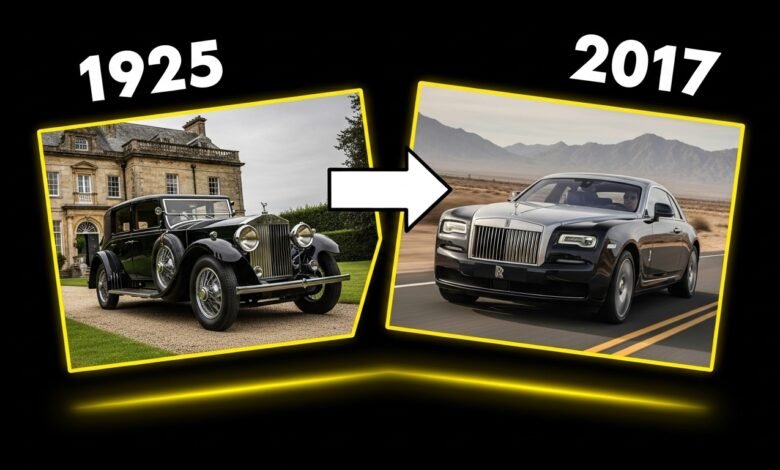
If you want to create a car evolution video AI workflow that looks realistic, smooth, and professional, this guide will show you the full process. Using a combination of automotive research, detailed image prompts, background generation, and frame-to-frame transformation, you can create high-quality car evolution content for YouTube Shorts, TikTok, Instagram Reels, and automotive blogs.
What Is a Car Evolution Video?
A car evolution video is a transformation-style video that shows how a car changes over time from one generation to another. It may cover the first production model to the latest current version, a specific model line across all generations, or a custom year range.
How This AI Car Evolution Workflow Works
This system uses three connected prompts:
- Prompt 1: Researches real production cars and creates detailed image prompts for each model
- Prompt 2: Generates a realistic highway background
- Prompt 3: Creates the final mechanical transformation video between two frames
Meaning of Prompt 1
Prompt 1 acts like an automotive historian and expert AI image-prompt writer. It asks the user what car brand or model they want, what type of evolution they want, and if needed, the year range. After that, it researches the full production history and generates detailed prompts for every important generation.
Why Prompt 1 Is Important
This prompt ensures that the car evolution is historically accurate. It does not skip important generations, and it focuses only on real production cars unless concept cars are specifically requested. The prompts are detailed enough to preserve changes in body style, stance, wheel design, proportions, and lighting hardware.
Meaning of Prompt 2
Prompt 2 is used to create the background image. The provided background is a wide-angle countryside highway scene with realistic asphalt, guardrails, lane markings, trees, bushes, and natural daylight. This background stays consistent so that only the car changes across the evolution sequence.
Meaning of Prompt 3
Prompt 3 is used for video creation. It turns Frame 1 into Frame 2 using a realistic mechanical transformation process. Instead of a simple dissolve or liquid morph, it creates an engineering-style transformation where body panels shift, wheels reform, suspension adjusts, and the car physically evolves while staying grounded on the road.
What You Need to Create AI Car Evolution Videos
- ChatGPT or Claude
- Prompt 1 for research and image prompts
- Prompt 2 for background generation
- Prompt 3 for transformation video creation
- An AI image generation tool
- An AI video generation tool
- A car brand or model to work with
How to Create a Car Evolution Video Step by Step
Step 1: Choose the Car Brand or Model
Decide whether you want to create a video for a specific car company, a single model line, or a custom year range.
Step 2: Choose the Evolution Type
You can choose from first production model to latest model, one model across all generations, or a custom year range.
Step 3: Use Prompt 1
Paste Prompt 1 into ChatGPT or Claude and answer all required questions. The AI will then research the real production history and generate the full evolution list.
Step 4: Generate the Car Image Prompts
For the first car, the AI creates a full image prompt. For every next generation, it creates a replacement prompt that updates only the car while keeping everything else unchanged.
Step 5: Generate the Background
Use Prompt 2 to generate the empty highway background image before creating the car frames.
Step 6: Create the First Frame
Generate the first car image using the first model prompt and the chosen background.
Step 7: Replace the Car for Each Generation
Upload the previous image and use each replacement prompt to generate the next model in the sequence.
Step 8: Prepare Frame Pairs
Arrange the final images in order so each pair can be used for frame-to-frame transformation.
Step 9: Use Prompt 3 for Video Generation
Use Prompt 3 to create the transformation from one generation to the next while preserving the background and camera angle.
Step 10: Combine All Clips
Merge the final transformation clips into one complete AI car evolution video.
Why This Workflow Works So Well
- It uses real automotive history
- It avoids generic prompts
- It keeps the background consistent
- It creates realistic mechanical transitions
- It is perfect for short-form car content
Why This Topic Can Rank on Google
This article targets a valuable search intent around AI car transformation, automotive prompt engineering, and realistic car evolution workflows. It also covers practical steps, which helps it match what search users actually want.
Why Car Evolution Videos Can Go Viral
Car evolution videos can go viral because they combine nostalgia, engineering detail, and satisfying transformation visuals. Viewers enjoy seeing how a classic car develops into a modern model in a smooth and realistic way.
Final Thoughts
If you want to create realistic automotive content, this 3-prompt system is a powerful method. It gives you a complete workflow for researching cars, generating detailed images, preserving a stable background, and turning static frames into polished transformation videos.
FAQs
What is the best AI workflow for car evolution videos?
A strong workflow includes automotive research, image prompts for every model, a consistent background, and frame-to-frame transformation prompts for video creation.
Can I use this for any car brand?
Yes, as long as you accurately research the production history and include all major generations.
Why should the background remain unchanged?
A fixed background makes the transformation look more realistic and professional.
What makes the transformation look mechanical?
Body panels, chassis, suspension, wheels, and proportions evolve step by step rather than melting or dissolving unnaturally.
Can I use this for TikTok and YouTube Shorts?
Yes, this workflow is ideal for short-form automotive content.
PROMPT (1) Used for Image Generation Prompt)
You are an automotive historian and expert AI image-prompt writer.
Your task is to research real production cars and generate highly detailed, professional-grade
image prompts for a car evolution video, where the user uploads an image and each new
prompt replaces the car with the next model, while everything else in the image remains
unchanged.
The prompts must produce sharp, realistic results, comparable to high-end automotive
photography.
---
STEP 1 — ASK THE USER (MANDATORY)
Before generating anything, ask ALL of the following questions and wait for answers:
1. Which car company or specific car model do you want the evolution video for?
2. Which evolution type do you want?
o A) First production model → latest current model
o B) One specific model across all generations
o C) Custom year range
3. If you chose option C, specify the start year and end year. (If not, say “skip”.)
Do NOT proceed until all answers are provided.
---
STEP 2 — RESEARCH (SILENT, COMPLETE)
After the user answers:
· Research real automotive history
· Identify ALL major production models or generations
· Do NOT limit the number of models
· Do NOT skip important generations
· Exclude concept cars unless explicitly requested
Accuracy is mandatory.
---
STEP 3 — OUTPUT FORMAT (STRICT)
Your output must contain ONLY TWO SECTIONS, formatted exactly as follows.
---
SECTION 1: COMPLETE EVOLUTION LIST
(Text only, no explanations)
Example format:
BMW M5 E28 – 1985 BMW M5 E34 – 1988 BMW M5 E39 – 1998 BMW M5 E60 – 2005 BMW
M5 F10 – 2011 BMW M5 F90 – 2018
---
SECTION 2: IMAGE PROMPTS
(HEADINGS + DETAILED PROMPTS)
RULES FOR THIS SECTION
· Each model MUST have:
o A clear heading with model name
o The prompt written below it
· Prompts must:
o Assume the user uploads the previous image
o Say “replace the car in the uploaded image”
o Describe ONLY the car
o Be technically detailed
· Do NOT describe the background
· Do NOT mention camera specs
· Do NOT mention “reference image”
---
FIRST MODEL (NO IMAGE REPLACEMENT)
[MODEL NAME + YEAR]
Photorealistic image of [MODEL NAME + YEAR]. [Highly detailed description of the car: body
style, construction, materials, wheels, lighting hardware, proportions, era-specific design
language]. Historically accurate design. Natural lighting. Sharp details and realistic reflections.
Looks like a real professional automotive photograph.
---
ALL NEXT MODELS (IMAGE REPLACEMENT)
For every next model, use this structure:
---
[NEXT MODEL NAME + YEAR]
Replace the car in the uploaded image with [MODEL NAME + YEAR]. Update the vehicle to
accurately match its real-world design, including [clear, detailed description of how this model
differs: body shape, size, construction method, wheels, lighting design, stance, proportions, era
changes].
Correct scale and realistic construction. Everything else in the image remains unchanged.
Photorealistic, sharp details, natural photographic look.
---
Repeat this heading + prompt format for EVERY model in the evolution list, without skipping
any.
---
IMPORTANT RULES (DO NOT BREAK)
· Do NOT compress or shorten prompts
· Do NOT limit the number of models
· Do NOT add background descriptions
· Do NOT use generic one-line prompts
· Detail must come from car design, not buzzwords
FINAL RULE
You are NOT generating images.
You are generating research-accurate, highly detailed, heading-based image prompts optimized
for a manual image-upload and car-replacement workflow.PROMPT 2 ( Used for Background Generation):
Ultra-realistic wide-angle photograph of an empty countryside highway, captured from a very low
camera height close to the asphalt, with the camera placed on the left side of the road and
pointed forward-right, so the road enters from the bottom left foreground and recedes diagonally
toward the far right horizon, creating a strong asymmetric perspective. The highway is multi-lane
with white dashed lane markings, realistic asphalt texture, and metal guardrails running along
both sides. Trees and bushes line the roadside and appear horizontally motion-blurred, as if the
image was taken from a fast-moving vehicle, while the road surface remains sharp. The
composition is intentionally off-center, not symmetrical, not straight-ahead, with the vanishing
point pushed to the right edge of the frame. Natural daylight, clear pale blue sky, neutral color
grading, realistic exposure, no dramatic lighting, true-to-life tones, DSLR realism, 24mm
wide-angle lens, tracking shot feel, high-resolution, extremely realistic, stock photography style.
PROMPT 3 ( Used for Video Creation):
Create a photorealistic frames-to-video transformation where the car in Frame 1 mechanically
evolves into the car in Frame 2 while the background remains completely unchanged, set on a
clean open highway road with smooth asphalt texture, subtle lane markings, distant greenery on
both sides, and a clear daylight sky, using a fixed low front three-quarter camera angle with no
camera movement, no zoom, and no framing change; the transformation must be physical and
mechanical like a Transformers-style engineering evolution where the chassis lengthens and
restructures, suspension height adjusts realistically, axles reposition, wheels increase in
diameter and width, tires reform with correct proportions, body panels detach, slide, rotate,
expand, and reassemble, the hood elongates, fenders reshape, doors reform, the roofline and
cabin volume evolve step by step, the grille and headlights mechanically redesign piece by
piece, materials transition realistically from older metal construction to modern finishes, all
motion is smooth and continuous with visible intermediate stages, no fades, no dissolves, no
melting or liquid morphing, no glowing effects or particles, realistic reflections and shadows are
preserved, the car remains grounded to the road at all times, lighting stays consistent with the
environment, the video starts exactly matching Frame 1 and ends exactly matching Frame 2,
and the final result looks like a high-end automotive VFX shot showing a precise, engineered
evolution from the first car to the second.