
AI Knee Restoration Technology: How Futuristic Mobility Chambers Could Transform Joint Recovery
Introduction
Advances in artificial intelligence and regenerative healthcare have inspired a new generation of futuristic rehabilitation concepts. One of the most exciting ideas is AI knee restoration technology—a smart recovery system designed to optimize knee mobility, stability, and walking confidence through advanced bioengineering and real-time analysis.
While many of these technologies are still emerging, researchers and innovators continue exploring how AI-guided rehabilitation could support people who experience knee stiffness, reduced flexibility, or difficulty with everyday movement.
In this article, we will explore how AI knee restoration technology works, its potential benefits, and why futuristic mobility chambers are becoming a popular topic in modern healthcare discussions.



What Is AI Knee Restoration Technology?
AI knee restoration technology refers to a futuristic rehabilitation concept that combines:
- Artificial intelligence
- Motion analysis systems
- Biomechanical modeling
- Joint mobility optimization
- Regenerative support technologies
- Real-time movement feedback
Instead of relying only on traditional exercises, an AI-powered system continuously analyzes how the knee joint moves and adjusts rehabilitation recommendations automatically.

The goal is to improve:
- Knee alignment
- Joint stability
- Walking efficiency
- Stair-climbing confidence
- Balance and coordination
- Lower-body mobility
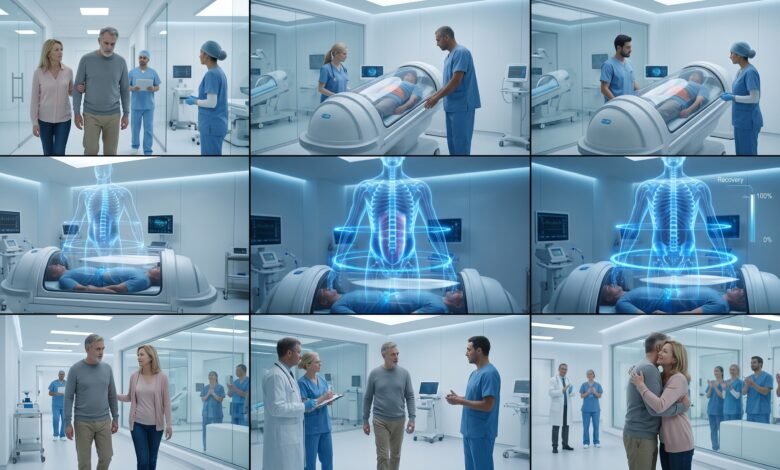
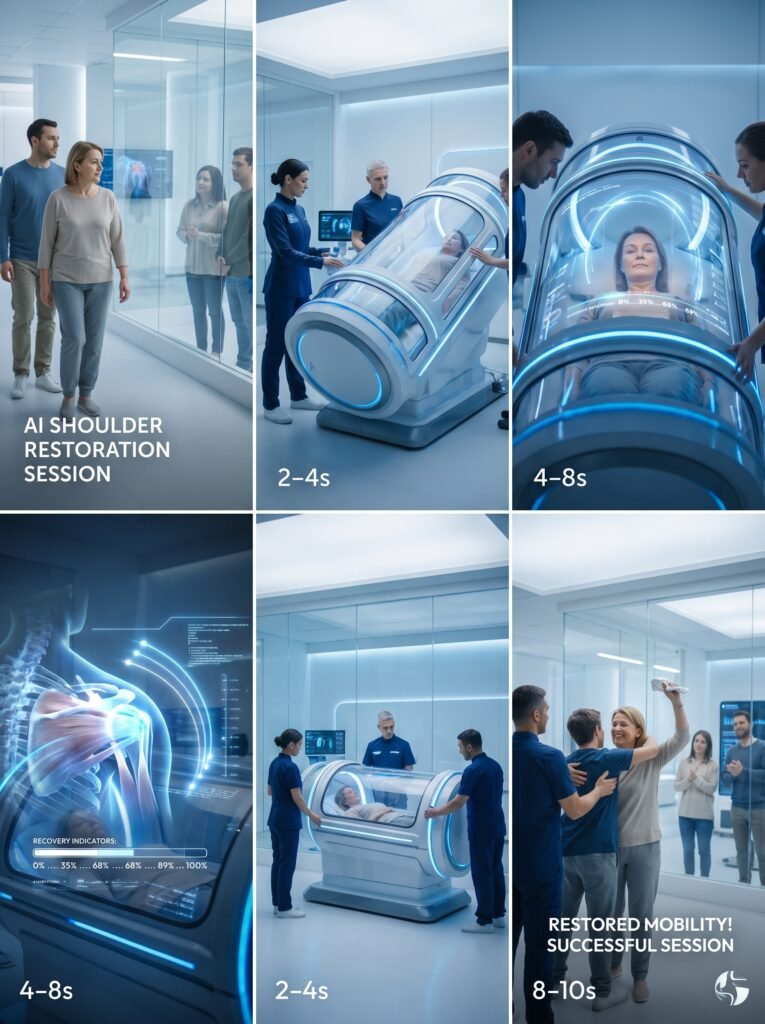
How a Futuristic Knee Restoration Chamber Could Work
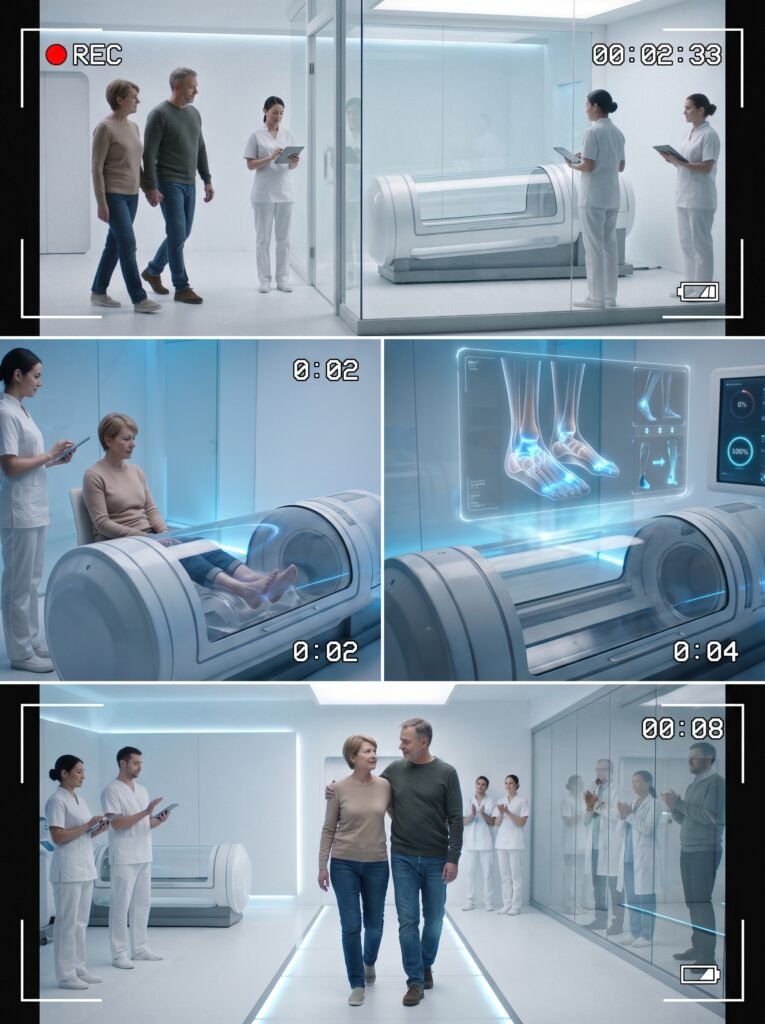
- Initial Movement Scan
- Sensors analyze knee bending, walking patterns, and weight distribution.
- 3D Holographic Modeling
- A detailed digital model of the knee joint appears, highlighting areas that need optimization.
- AI Optimization
- The system adjusts support, alignment guidance, and rehabilitation parameters in real time.
- Mobility Training
- Patients perform gentle walking, stair-climbing, and balance exercises while the AI monitors progress.
- Performance Assessment
- The chamber generates a recovery score and recommends the next rehabilitation session.
Potential Benefits of AI Knee Restoration
- Feature Potential Benefit
- AI motion analysis More precise rehabilitation guidance
- Real-time feedback Faster movement correction
- 3D joint visualization Better understanding of knee mechanics
- Balance training Improved walking stability
- Adaptive exercises Personalized recovery experience
- Progress tracking Measurable improvement over time
Why Knee Stability Matters
The knee is one of the most important joints in the human body. It supports:
- Walking
- Standing
- Climbing stairs
- Squatting
- Balance
- Directional movement
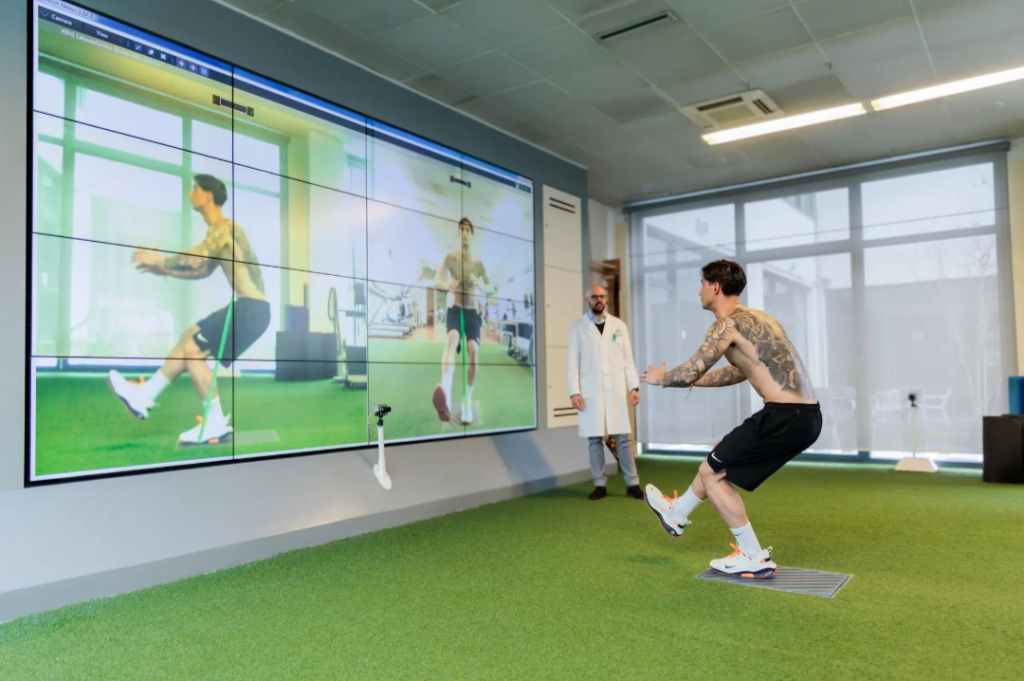
When knee stability decreases, people may experience:
- Difficulty walking long distances
- Reduced confidence on stairs
- Slower movement
- Increased fatigue
- Balance challenges
- AI-assisted rehabilitation aims to address these functional movement issues through data-driven optimization.
The Role of Holographic Visualization
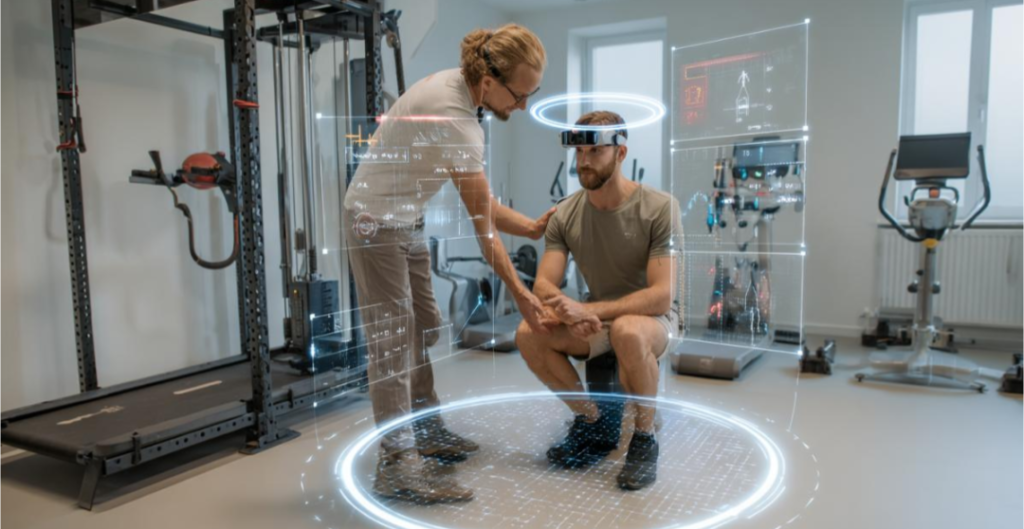
One of the most visually impressive aspects of futuristic rehabilitation concepts is holographic joint visualization.
By displaying a 3D model of the knee, therapists and patients can see:
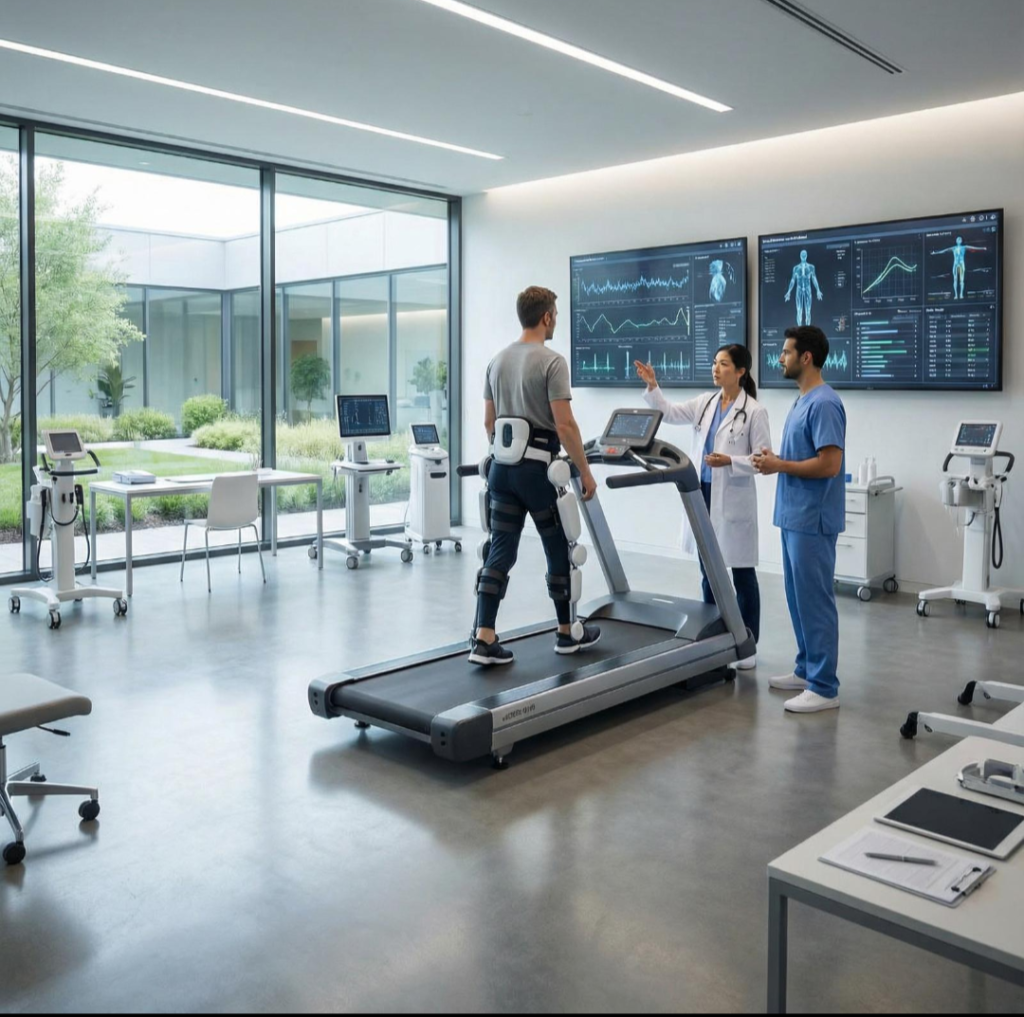
Could AI Replace Traditional Physical Therapy?
- Most experts believe AI is more likely to support physical therapists rather than replace them.
- A future rehabilitation model may combine:
- Human clinical expertise
- AI movement analysis
- Wearable sensors
- Virtual rehabilitation tools
- Personalized exercise programs
- The therapist provides medical judgment, while AI provides detailed movement data and progress tracking.
AI knee restoration technology represents an exciting vision of the future of rehabilitation. By combining artificial intelligence, biomechanical analysis, and advanced visualization, future mobility systems could help people improve knee stability, walking confidence, and overall lower-body performance.
Although many futuristic features are still being developed, the rapid progress of AI-assisted healthcare suggests that personalized, data-driven rehabilitation may become increasingly important in the years ahead.
For anyone interested in future medicine, regenerative technology, and mobility optimization, AI knee restoration is one of the most fascinating concepts to watch.
To Booking this click apply now blow