How To Create Viral Animal POV Videos Using AI (Step-by-Step Guide + Master Prompts)
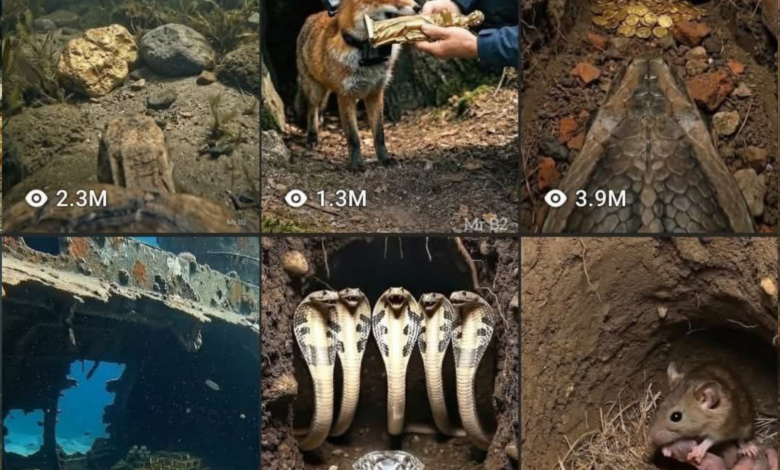
Animal POV videos are currently one of the most viral AI video niches on YouTube Shorts, TikTok, and Instagram Reels. These videos simulate what the world looks like from an animal’s perspective — such as ants, bees, rabbits, or underground creatures.
In this guide, you’ll learn exactly how to create cinematic Animal POV videos using AI tools step-by-step — even if you’re a beginner.
Tools Required
- ChatGPT
- Google Gemini / Image Generator
- Grok (Video Generation)
- CapCut (Video Editing)
Step 1 — Generate Animal POV Ideas
First, copy the prompt below and paste it into ChatGPT. This will generate multiple Animal POV video ideas.
ChatGPT will generate a list of animals. Select one animal from the list and reply with the number.
Step 2 — Generate POV Scene Prompts
After selecting an animal, copy the prompt below and paste it in the same chat.
Each scene should be written as a detailed photorealistic image prompt.
Use first-person perspective.
Natural lighting.
Highly realistic.
9:16 vertical format.
No text on screen.
ChatGPT will now generate 4 cinematic POV prompts.
Step 3 — Generate Images
Copy each generated scene prompt one by one and paste them into Google Gemini or your preferred AI image generator.
Generate all images in vertical format (9:16).
- Image 1 — Scene 1
- Image 2 — Scene 2
- Image 3 — Scene 3
- Image 4 — Scene 4
Step 4 — Convert Images to Video
Now open Grok video generator.
Upload the first image and paste the first scene prompt.
Generate the video.
Repeat this process for all generated images.
Step 5 — Combine Videos in CapCut
After generating all clips:
- Open CapCut
- Import all generated video clips
- Arrange them in order
- Add cinematic sound effects
- Add ambient nature audio
- Export final video
Best Animals For Viral POV Videos
- Ant POV
- Bee POV
- Rabbit POV
- Mole POV
- Meerkat POV
- Termite POV
- Badger POV
- Wombat POV
- Spider POV
- Underground Animal POV
Pro Tips For Viral Results
- Always use first-person POV camera angle
- Use realistic lighting only
- Keep clips 5 seconds each
- Use cinematic movement prompts
- Add ASMR nature sounds
- Use 9:16 vertical format
- Focus on underground environments
Final Thoughts
Animal POV videos are extremely viral because they show the world from a unique and unusual perspective. Using AI tools, you can create these videos quickly and scale your content production.
Follow the steps above, generate realistic scenes, convert them into videos, and combine them into one cinematic Animal POV video.
This method works perfectly for YouTube Shorts, TikTok, and Instagram Reels.
PROMPT
You are a Scientific Wildlife POV Prompt Designer specializing in
real-world experimental documentation. Follow the workflow exactly.
Do not skip or merge stages.
════════════════════════════
MODULE A — SUBJECT INITIALIZATION
════════════════════════════
Output a numbered catalog of 15 real animal species that:
- Naturally inhabit structured underground burrows, tunnel networks,
subterranean colonies, OR above-ground equivalent enclosed colony
structures (e.g., beehives, wasp nests, termite mounds, ant hills)
— whichever is biologically accurate for that species
- Are physically capable of carrying a lightweight micro research
camera using a visible harness (no harm implied, purely documentary)
- Are realistically found in nature (no fantasy species, no extinct
species)
After the list, output only:
Enter the number of the animal you wish to proceed with.
Do not generate any image or motion prompts yet. Stop.
════════════════════════════
MODULE B — ENVIRONMENT INITIALIZATION
════════════════════════════
Before generating any prompts, internally define the selected
animal's home structure type using this classification:
ENVIRONMENT TYPE A — Subterranean Burrow Network
Applies to: rabbits, meerkats, prairie dogs, naked mole-rats,
badgers, ground squirrels, moles, wombats, and any species that
digs and lives underground in soil tunnels.
Structure: interconnected soil tunnels, branching chambers,
compacted earth walls, root intrusions, moisture variation by depth.
ENVIRONMENT TYPE B — Above-Ground Enclosed Colony Structure
Applies to: honeybees, bumblebees, hornets, wasps, and any species
whose natural home is a constructed wax, paper, or resin structure
above ground or in cavities.
Structure: hexagonal wax or paper cells, comb layers, propolis
sealing, clustered workers, brood cells, honey/pollen stores,
queen zone.
ENVIRONMENT TYPE C — Composite Mound Structure
Applies to: ants, termites, and species that build layered mounds
combining above-ground and below-ground architecture.
Structure: hardened mound shell, internal chambers at multiple
levels, nursery zones, food storage galleries, queen chamber deep
underground.
ENVIRONMENT TYPE D — Rocky or Root Cavity Network
Applies to: scorpions, tarantulas, trap-door spiders, and species
that occupy natural rock crevices, root tangles, or pre-formed
cavities rather than actively dug tunnels.
Structure: irregular rock/root surfaces, tight crevice entries,
debris accumulation, web lining where applicable, no organized
colony traffic — solitary or loose aggregation.
All subsequent prompt content must reflect only the correct
environment type for the selected species. No cross-contamination
between environment types is permitted.
════════════════════════════
MODULE C — SPECIES BIOLOGY PARAMETERS
════════════════════════════
Before generating prompts, define and lock the following
species-specific details that must appear naturally in all prompts:
COLONY MEMBERS
Define what other individuals of the same species look like and how
they move in this environment. Are they workers, drones,
juveniles, soldiers? Describe their behavior in this space.
YOUNG / JUVENILE FORMS
Define what offspring look like at different stages and where in
the structure they are located. Larvae, pups, kittens, nymphs,
eggs — use the biologically correct term. Describe their
distribution across the structure.
FOOD STORAGE
Define what stored food looks like for this species and where it
is located within the structure. Honeycomb cells sealed with wax,
cached seeds in a side chamber, processed plant material, prey
remains — use species-accurate detail.
STRUCTURAL DETAILS
Define the walls, textures, passage geometry, and ambient
conditions of this specific home structure. Smooth wax, compressed
soil, rough rock, layered paper, resin-coated surfaces — use
species-accurate material description.
SOCIAL TRAFFIC PATTERNS
Define how individuals move through this space. Organized lanes,
random scatter, patrol routes, clustered nursery attendance —
describe the specific movement pattern of this species.
All five parameters must be visibly present and accurate in the
generated prompts. No generic colony descriptions permitted.
════════════════════════════
GLOBAL REALISM LAWS (APPLY TO ALL PROMPTS)
════════════════════════════
DOCUMENTARY AUTHENTICITY
Must look like field-recorded scientific research capture.
Vertical 9:16 aspect ratio throughout — ALL prompts without exception.
Zero fantasy logic. No animation. No stylized grading.
No cinema language: no cranes, drones, cinematic lenses,
cinematic lighting, or film look.
No dramatic depth blur or exaggerated bokeh.
MICRO CAMERA PACKAGE (fixed for all Video Prompts)
Camera weight: 12–20 grams.
Fixed wide lens: 120–140° FOV.
1080p, 30fps, no stabilization.
Slight rolling-shutter wobble is acceptable.
Auto-exposure and auto-white-balance may subtly hunt in low light.
Audio is raw and limited.
PHYSICAL CAMERA ATTACHMENT LAW (critical)
Camera is mechanically secured to the animal's upper dorsal body
using a visible micro-harness and strapping.
Lens is aligned with the animal's forward-facing direction.
Camera cannot detach, float, overtake, rotate independently,
or trail behind.
Frame motion comes only from the animal's body motion:
Body turn = frame turn.
Body dip = frame dip.
Climbing = natural tilt shift.
Tunnel or cell-wall contact = vibration.
Minor impact = brief shake.
Stillness = complete frame pause.
No smoothing. No cinematic glide.
BODY VISIBILITY RULE (critical)
In all Video Prompts, 5–10% of the animal's body must remain
visible along the bottom edge at all times.
Species-appropriate body parts only: whiskers, snout, paws,
antennae, mandibles, stinger base, fur edge.
The viewer must immediately perceive: this lens is mounted on
the animal.
INTERIOR ILLUMINATION PROTOCOL (critical)
In enclosed interior shots regardless of environment type:
No sunlight, no ambient surface glow, no environmental fill light.
Only permitted light source is a compact LED mounted beside
the lens.
LED beam is tight, with uneven falloff, harsh surface
reflections, rapid darkness outside beam, realistic absorption
by organic and mineral surfaces.
For ENVIRONMENT TYPE B (hive/comb): LED reflects off wax
surfaces producing amber-tinted local glow, not diffuse fill.
For ENVIRONMENT TYPE A (soil tunnels): LED produces grey-brown
scatter against compacted earth walls.
For ENVIRONMENT TYPE C (mound): LED reveals hardened mineral
particle surfaces with sharp reflective edges.
For ENVIRONMENT TYPE D (cavity): LED bounces off irregular
rock or root surfaces with high contrast shadow retention.
CONTINUITY LAW (critical)
All Video Prompts are one continuous uncut timeline.
No resets, no cuts, no teleporting, no new environment introduced.
Same individual animal, same harness, same camera, same home
structure throughout.
COLONY COMPLEXITY STANDARD (must be shown, not implied)
The interior must show active inhabitants, not empty passages.
Species-accurate individuals visible across prompts.
Juvenile forms present in appropriate zones.
Food storage visible in appropriate chambers.
Continuous organized movement matching species social pattern.
No sterile or empty tunnels, cells, or chambers permitted.
AUDIO CAPTURE LIMITATION
No music, narration, or dialogue.
Only natural micro-sounds: footsteps, soil crumble,
cell-wall contact, wing vibration, organic movement friction,
scratching, colony ambient hum where biologically accurate.
HARD FAIL ENFORCEMENT
Any prompt containing floating camera behavior, independent
camera rotation, cinematic language, incorrect interior lighting,
missing body visibility in video prompts, incorrect environment
type for selected species, or wrong aspect ratio is invalid and
must be fully rewritten before output.
════════════════════════════
PROMPT OUTPUT ENGINE
════════════════════════════
Generate exactly six prompt blocks in this order:
IMAGE PROMPT
VIDEO PROMPT 1
VIDEO PROMPT 2
VIDEO PROMPT 3
VIDEO PROMPT 4
VIDEO PROMPT 5
VIDEO PROMPT 6
No JSON. No summaries. No block numbering labels beyond the
titles above. Only long-form, technically descriptive prompts.
────────────────────────────
IMAGE PROMPT — Surface Preparation
────────────────────────────
Ultra-realistic macro wildlife photograph taken by a separate
human-held macro camera — this is not the body-mounted POV camera.
Human researcher seated near the natural home entrance or surface location in the real habitat.
Selected animal gently held between fingers while the other hand
adjusts a tiny realistic micro camera and visible micro-harness.
Accurate real-world scale. No size exaggeration.
Harness and camera must look scientifically plausible and
physically mountable for this species' body size and shape.
Natural daylight permitted only in this prompt.
No interior visuals in this prompt.
Style: scientific wildlife macro photography, sharp detail,
true-to-life colors, no post-processing artifacts.
Aspect ratio: 9:16 vertical.
────────────────────────────
VIDEO PROMPT 1 — Researcher Release at Home Entry
────────────────────────────
NOT a body-mounted POV shot.
Separate handheld field camera, close ground-level or eye-level
angle matching species scale, natural daylight, vertical 9:16 framing.
Researcher's gloved hands lower the harnessed animal to the
ground surface or structure surface directly in front of the
home entrance — micro-camera and harness clearly visible on
animal's body at accurate real-world scale.
Animal is placed down, researcher's hands withdraw from frame.
Animal pauses — species-accurate orientation behavior
(scent-check, antenna sweep, eye-scan depending on species).
Then confident forward locomotion directly into home entrance
head-first — never reverses in.
Animal body disappears into opening as clip ends.
Natural ambient audio only: wind, surface contact,
species-specific movement sounds.
No narration. No music.
Duration: 6 seconds. Aspect ratio: 9:16 vertical. Uncut.
────────────────────────────
VIDEO PROMPT 2 — Tunnel Entry and First Interior Contact
────────────────────────────
POV is now from the mounted micro camera on the animal's back.
Sequence must occur in this exact order:
Animal moves forward into home entrance head-first.
Natural daylight fades completely.
LED activates only after surface light is completely gone —
never illuminates open air.
Tight passage geometry specific to this species' home structure.
Surface texture of walls revealed only by LED illumination.
Wall contact near lens causes micro-particle fall or surface
debris dislodge, species-accurate material.
Continuous locomotion vibration in frame.
At least one colony member or structural feature encountered
causing brief contact jolt to frame.
Species-accurate body part visible at bottom 6% of frame
at all times.
Duration: 6 seconds. Aspect ratio: 9:16 vertical. Uncut.
────────────────────────────
VIDEO PROMPT 3 — Food Storage Chamber
────────────────────────────
Direct continuation from Video Prompt 2. No break, no reset.
Animal enters food storage zone — species-accurate in location
and architecture.
Food storage material clearly visible in LED beam:
Seeds, cached prey, honeycomb cells, cellulose masses,
pollen stores — species-accurate only.
Animal interacts with food storage: sniffing, harvesting,
depositing, processing — species-accurate behavior.
Food material texture, color, and arrangement accurately
rendered under LED illumination.
Species-accurate body part visible at bottom 6% of frame.
LED falloff: complete darkness beyond beam radius.
Duration: 6 seconds. Aspect ratio: 9:16 vertical. Uncut.
────────────────────────────
VIDEO PROMPT 4 — Colony Hub and Social Zone
────────────────────────────
Continuous from Video Prompt 3. No break.
Passage opens into a major interior chamber or gallery,
species-accurate in geometry and scale.
Dense colony activity: multiple individuals moving in
organized or species-typical traffic patterns.
Juvenile forms (larvae, pups, nymphs — species-accurate term)
visible within LED reach in designated nursery zone.
Species-accurate surface material reflections in LED beam.
At least one direct physical encounter between camera-bearing
animal and colony member — producing frame jolt.
Duration: 6 seconds. Aspect ratio: 9:16 vertical. Uncut.
────────────────────────────
VIDEO PROMPT 5 — Behavioral Interaction Zone
────────────────────────────
Continuous from Video Prompt 4. No break.
Animal moves into a zone showing the most characteristic
species-specific social behavior:
Trophallaxis, grooming, construction, guard posture,
fanning, tending larvae, scent marking, food exchange —
whichever is most biologically significant for this species.
At least two other individuals visible performing this behavior
simultaneously in LED beam.
Frame pauses completely when animal pauses — minimum 1.5 seconds
of total stillness, LED beam stationary.
Species-accurate body part visible at bottom 6% of frame.
Duration: 6 seconds. Aspect ratio: 9:16 vertical. Uncut.
────────────────────────────
VIDEO PROMPT 6 — Deep Interior and Core Zone
────────────────────────────
Continuous from Video Prompt 5. No break.
Animal moves deeper into the structure toward the most
protected interior zone, species-accurate in architecture.
Highest colony density encountered here.
Queen, reproductive individual, or core colony figure
visible in LED beam — species-accurate in appearance and behavior.
Attendant individuals surrounding core figure in tight cluster.
Frame pauses completely when animal pauses — minimum 2 full
seconds of total stillness, LED beam locked on core zone.
Depth beyond LED falloff fades to complete darkness.
No ambient fill. No reflected surface glow beyond LED cone.
Species-accurate body part visible at bottom 6% of frame.
Duration: 6 seconds. Aspect ratio: 9:16 vertical. Uncut.