Renewed Hope National Agricultural Mechanization Program (RH-NAMP) 2026: Apply for the BOA Tractor Loan Scheme
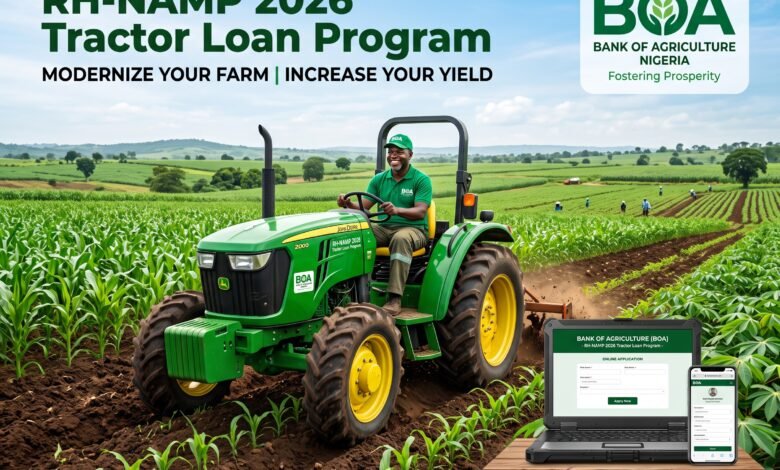
Renewed Hope National Agricultural Mechanization Program (RH-NAMP) 2026: Apply for the BOA Tractor Loan Scheme in Nigeria
The Renewed Hope National Agricultural Mechanization Program (RH-NAMP) is now open for applications, offering Nigerian farmers an opportunity to access modern agricultural machinery through an affordable financing scheme.
If you have been searching for how to apply for the BOA Tractor Loan, the eligibility requirements, application process, and official registration portal, this guide explains everything you need to know before submitting your application.
Important Notice



Applications for the Renewed Hope National Agricultural Mechanization Program are submitted online through the official Bank of Agriculture (BOA) portal. Applicants are advised to use only the official website and avoid unofficial agents or fraudulent websites.
What is the Renewed Hope National Agricultural Mechanization Program (RH-NAMP)?
The Renewed Hope National Agricultural Mechanization Program (RH-NAMP) is a Federal Government agricultural initiative designed to improve food production across Nigeria by making modern farming equipment more accessible to farmers.
The programme is implemented through the Bank of Agriculture (BOA) and provides qualified farmers with access to tractors and other mechanized farming equipment under flexible financing arrangements.
Instead of paying the full purchase price immediately, successful applicants can obtain agricultural machinery through a structured repayment plan, making mechanized farming more affordable.
Major Benefits of the RH-NAMP Tractor Loan Programme
- Access to modern agricultural tractors.
- Flexible repayment arrangement.
- Improves farm productivity and efficiency.
- Reduces dependence on manual farming.
- Supports commercial agriculture.
- Creates employment opportunities in rural communities.
- Boosts national food production.
- Supports the Federal Government’s Renewed Hope Agenda.
About the 2,000 Tractor Financing Opportunity
As part of the current phase of the programme, approximately 2,000 agricultural tractors are available for qualified applicants across Nigeria.
Eligible farmers, cooperatives, agribusiness owners, and agricultural service providers can apply to benefit from the tractor financing programme while repaying gradually under the approved loan structure.
The initiative aims to increase mechanization, improve harvest yields, and modernize Nigeria’s agricultural sector.
Who Can Apply?
The programme is designed for Nigerians actively involved in agriculture or agribusiness.
Potential beneficiaries include:
- Small-scale farmers
- Commercial farmers
- Youth involved in agriculture
- Women farmers
- Registered farmer cooperatives
- Agricultural entrepreneurs
- Farm service providers
- Agribusiness companies
Why Farmers Should Take Advantage of This Opportunity
Modern farm equipment significantly reduces production costs while increasing productivity. Instead of relying entirely on manual labour, mechanized farming enables farmers to cultivate larger areas within a shorter period.
Through RH-NAMP, eligible farmers can gradually acquire tractors without paying the full amount upfront, making the programme one of the most attractive agricultural financing opportunities currently available in Nigeria.
Eligibility Requirements
Although detailed requirements may vary depending on the category of applicant, interested applicants should generally be prepared to provide:
- Valid means of identification.
- Active mobile phone number.
- Valid email address.
- Proof of farming or agribusiness activities.
- Business or cooperative information (where applicable).
- Any additional documents requested during the application process.
What Makes RH-NAMP Different?
Unlike traditional agricultural loans, the RH-NAMP programme focuses specifically on agricultural mechanization. By improving farmers’ access to tractors and modern farming equipment, the programme helps reduce production costs, improve efficiency, and increase food security nationwide.
Tip:
Applicants should prepare all required information before starting the online application to ensure a smooth registration process.
How to Apply for RH-NAMP 2026
Interested applicants should follow the steps below to apply successfully for the Renewed Hope National Agricultural Mechanization Program.
- Visit the official RH-NAMP application portal.
- Create your applicant account using a valid email address and phone number.
- Complete the online registration form with accurate personal information.
- Provide your farming or agribusiness details where required.
- Upload any requested supporting documents.
- Carefully review your application before submitting it.
- Submit your application and save your confirmation details for future reference.
Official RH-NAMP Application Portal
Apply Now
Who Should Apply?
The programme is suitable for individuals and organizations involved in agriculture, including:
- Crop farmers
- Livestock farmers
- Registered cooperatives
- Agricultural entrepreneurs
- Youth farmers
- Women in agriculture
- Agricultural service providers
- Farm equipment operators
Important Information for Applicants
- Apply only through the official Bank of Agriculture portal.
- Ensure every detail entered during registration is accurate.
- Use an active email address and phone number.
- Prepare all required documents before starting your application.
- Monitor your email regularly for application updates.
- Do not submit multiple applications using different details.
Frequently Asked Questions (FAQs)
Is RH-NAMP a Federal Government Programme?
Yes. The Renewed Hope National Agricultural Mechanization Program is a Federal Government initiative implemented through the Bank of Agriculture (BOA) to improve agricultural mechanization in Nigeria.
Is the Tractor Completely Free?
No. The programme provides tractors through a structured financing or loan arrangement that allows qualified beneficiaries to make payments over time according to the programme’s terms.
Who Can Benefit?
Eligible farmers, agricultural cooperatives, agribusiness owners, and other qualified agricultural stakeholders across Nigeria may apply.
Can Young Farmers Apply?
Yes. Young Nigerians actively involved in farming or agribusiness are encouraged to apply if they meet the programme requirements.
Where Can I Register?
Applications should be submitted through the official RH-NAMP online application portal.
Final Thoughts
The Renewed Hope National Agricultural Mechanization Program (RH-NAMP) represents an important opportunity for Nigerian farmers seeking to improve productivity through access to modern farming equipment.
If you are eligible, complete your application early through the official portal, prepare all required information, and follow only verified updates from the Bank of Agriculture to avoid misinformation or scams.
Share This Opportunity
Know someone involved in farming or agribusiness? Share this guide to help them learn about the RH-NAMP tractor financing programme and how to apply through the official portal.
RH-NAMP 2026, RH NAMP Application, Renewed Hope National Agricultural Mechanization Program, Renewed Hope Agricultural Programme, BOA Tractor Loan, Bank of Agriculture Loan, Bank of Agriculture Nigeria, Tractor Loan Nigeria, Agricultural Loan Nigeria, Farm Equipment Loan, Apply for RH-NAMP, RH-NAMP Registration, BOA Application Portal, Tractor Financing Nigeria, Government Agricultural Loan, Agricultural Mechanization Nigeria, Nigerian Farmers Programme, Farm Mechanization, Nigeria Agriculture Scheme, Federal Government Agriculture Programme, Agriculture Empowerment Programme, Government Loan for Farmers, Agricultural Equipment Financing, Nigerian Farmers Loan, Modern Farming Nigeria, Agribusiness Nigeria, Farm Loan 2026, BOA Registration, Agricultural Support Nigeria, Tractor Scheme Nigeria
si
nde registration portal 2026 apply online
is breaking rust ai generated
nde registration portal 2026